40 under 40

Take 10 seconds to nominate a colleague, mentee or friend for our Forbes-style list. Must be under the age of 40 in 2026. Open to all maritime professions associated with naval architecture. See eligibility criteria. [hyperlinked].  
 

Nominate with LinkedIn profile 


JOIN TO ADVANCE

Renowned for the technical excellence of our events, publications and learning, we offer career pathways for naval architects and 16 associated professions [hyperlink to 16 professions].

join to influence

We cover everything from super yachts and green propulsion to warship resilience. Network 1-2-1 with top talent at our events or influence the maritime industry by joining one of our comittees.  

JOIN TO INNOVATE

We promote the interdisciplinary conversation at the heart of maritime innovation. Speak at our events, publish in our journals or simply join the discussion forums on our website.  

Not quite ready to join yet? 


?? HOW?? FILL IN EMAIL HERE AND SIGN UP WITH 1 CLICK 

DISCOVER

View All

>

Italian Navy orders two more PPA multipurpose combat ships

Detail Link
>

BAE Systems expands Glasgow facility with Janet Harvey Hall

Detail Link
>

Mediterranean methanol first for Grimaldi Group

Detail Link
>

Repair round-up: Scandlines to convert ferries to hybrid operations

Detail Link
>

FAME B100 certification for 'Whitchampion'

Detail Link
>

Downloadable directory from The Hovercraft Society

Detail Link
>

Geopolitical instability still big trouble for shipping, ICS report notes

Detail Link
>

Design of FFG-62 frigate further behind schedule than realised

Detail Link
>

'Naija Spirit' wins WFSA contest for a safe Lagos ferry

Detail Link
>

Tailor-made transfers for Japanese wind parks

Detail Link


???HOW??? what is the best slice to display TESTIMONIALS [LARGE photo + COLOURED BACKGROUND with LARGE quote imposed over it?]

  • Graduate Naval Architect [eg. Aidan Atkinson]

  • Prime Career [eg. Chris Nair]

  • Iconic Status and Giving back to Global Community [eg. Ian Buxton]

 
Global Events Connecting Maritime Leaders


Events


From flagship international conferences to specialist technical seminars, RINA events bring together experts, innovators, and professionals to share knowledge and shape the future of naval architecture.


Explore Upcoming Events
Events

Lorem ipsum dolor sit amet, consectetur adipiscing elit, sed do eiusmod tempor incididunt ut labore et dolore magna aliqua. Ut enim ad minim veniam, quis nostrud exercitation ullamco laboris nisi ut aliquip ex ea commodo consequat. Duis aute irure dolor in reprehenderit in voluptate velit esse cillum dolore eu fugiat nulla pariatur. Excepteur sint occaecat cupidatat non proident, sunt in culpa qui officia deserunt mollit anim id est laborum.

View All

CORPORATE PARTNERS

Using AI to fast-track maritime nuclear licensing
Ship repair and retrofit trends boost Seatrium
SPONSORED: FleetguardFIT™ Reduces Service Cost by 50% for Marine Customer
Alt-fuel adoption on the ascent, DNV notes
Green Marine dives deep with new subsea-focused investment
Fincantieri stacks up cruise build and repair work
New Logistics Support Ship designs from Damen
Call for UK to exploit 'unique' nuclear opportunity
Build it smart: UK yards must tackle AI and robotics skills gap
Heavy-lift muscle for Japanese wind farms
Four more Type 212CD subs for German Navy
Drones partner up for subsea asset checks
"Significant milestone" for homebuilt Indian Navy vessels
New IACS recommendation for shore-to-ship power
Damen repair division invests further in sustainability

HEADING


Lorem ipsum dolor sit amet, consectetur adipiscing elit, sed do eiusmod tempor incididunt ut labore et dolore magna aliqua.


CLICK HERE

HEADING


Lorem ipsum dolor sit amet, consectetur adipiscing elit, sed do eiusmod tempor incididunt ut labore et dolore magna aliqua.


CLICK HERE

Contact Us

Get in touch

Lorem ipsum dolor sit amet, consectetur adipiscing elit. Aliquam aliquam arcu nec dictum cursus. Phasellus porttitor vitae mi vitae interdum. Fusce eu libero et eros pharetra posuere. Class aptent taciti sociosqu ad litora torquent per conubia nostra, per inceptos himenaeos.

Lorem ipsum dolor sit amet, consectetur adipiscing elit, sed do eiusmod tempor incididunt ut labore et dolore magna aliqua. Ut enim ad minim veniam, quis nostrud exercitation ullamco laboris nisi ut aliquip ex ea commodo consequat. Duis aute irure dolor in reprehenderit in voluptate velit esse cillum dolore eu fugiat nulla pariatur. Excepteur sint occaecat cupidatat non proident, sunt in culpa qui officia deserunt mollit anim id est laborum.

The Bundestag and the Federal Government have agreed to exercise an option to procure four more Type 212CD submarines for the German Navy. The contract for the new submarines, which are being acquired by the German Navy and Royal Norwegian Navy under a joint programme, is one of the largest secured by thyssenkrupp Marine Systems.

The deal was initialled by the president of the Bundeswehr Procurement Agency, Annette Lehnigk-Emden, and thyssenkrupp Marine Systems CEO Oliver Burkhard in late December 2024. Germany will now build six Type 212CDs. Norway has also recently signalled its intention to increase the number of submarines it builds under the joint programme from four to six.

Speaking as that deal was confirmed, Burkhard said: “A turning point in history is finally arriving in the maritime sector. We are delighted at the trust that the German government has once again placed in us with the additional order. We are making a decisive contribution to Germany’s response to changing times and strengthening our defence capabilities with this strategically important project between Germany and Norway.”

The Type 212CD submarines will be significantly more capable than the German Navy’s existing Type 212A boats, with enhanced situational awareness, superior networking with allied units and a reduced signature.

In advance of the construction of the submarines, thyssenkrupp Marine Systems has invested more than €250 million at the company’s yard in Kiel, including a new shipbuilding hall. The group has also acquired additional shipyard capacity at the former MV Werften site in Wismar, to be able to build submarines and surface vessels there at the same time.

“Our order books are well-filled and we are strongly positioned nationally and internationally,” said Burkhard, noting that now that the number of Type 212CD submarines on order has been increased, other countries could join the project in the near future. “Our strong position has now become even stronger,” he concluded.

A team-up between boatbuilder/USV manufacturer Tuco Marine and maritime survey tech company EIVA aims to establish an all-in-one autonomous package for subsea asset inspections, matching a Tuco-built ProZero 8m Naval Intelligence USV to EIVA’s ViperFish remotely operated towed vehicle (ROTV).

In practice, the USV would sail to an area of interest, towing and remotely launching the ViperFish. The ViperFish would be equipped with sensors and survey software, and would undertake high-resolution seabed imaging, with area coverage rates of 1.6km2/hr,  while using magnetic signals to monitor subsea assets, such as power cables.

Jonas Pedersen, MD of Tuco Marine, comments: “By combining…our ProZero with EIVA’s ROTV, it’s possible to monitor the conditions of critical subsea infrastructure much more thoroughly and frequently than with conventional set-ups.”

Launched in 2023, the ViperFish measures 3,200mm x 1,300mm x 620mm and is rated for depths descending to 200m. The ROTV is designed for surveys at 2-10knots, and has a reported target positioning accuracy of 1m. EIVA suggests that, when integrated with an USV, the ViperFish can also be used for mine countermeasures, rapid environmental assessment, surveillance and salvage missions.

The commissioning this week of three frontline naval vessels by the Indian Navy marks a “significant milestone in India’s shipbuilding and design capabilities”, according to analytics firm GlobalData.

January 15 saw the entries of INS Surat (163m), the fourth and final unit of the Visakhapatnam class of stealth guided-missile destroyers; INS Nilgiri (149m), the lead ship of the Nilgiri class of stealth guided-missile frigates; and INS Vagsheer (67.5m), the sixth of six Kalvari-class diesel-electric submarines. The vessels were constructed by Mazagon Dock Shipbuilders Limited (MDL), Mumbai.

Rithik Rao, aerospace and defence analyst at GlobalData, writes: “Armed with advanced weaponry such as BrahMos and Barak 8 missiles, both INS Surat and INS Nilgiri provide the Indian Navy with enhanced anti-surface and anti-air warfare capabilities, excelling in both offensive and defensive roles.

“INS Vagsheer excels in a range of operations, including anti-surface and anti-submarine warfare, intelligence gathering and area surveillance. Together, these domestically built platforms demonstrate India’s growing competence in developing cutting-edge naval technologies, thereby strengthening its maritime security and reinforcing its strategic autonomy in defence production.”

Rao adds that India has felt the need to step up its naval defence capabilities due to “the increasing maritime presence” of the Chinese People’s Liberation Army Navy (PLA Navy) in the Indian Ocean Region. “[India] is trying to catch up with its Chinese counterparts in terms of quantity and technology advancements,” Rao says. GlobalData has forecast that India will spend just over US$35 billion on various domestically built naval vessels and subs in the run-up to 2029.

“Shipbuilders such as MDL stand to benefit significantly, leveraging the expertise gained from constructing complex naval platforms,” says Rao. “Such advancements will lay a strong foundation for future collaborations between major domestic defence contractors and many small and medium suppliers in upcoming next-generation submarine and naval vessel construction programmes, ensuring the Indian Navy remains well-equipped to meet evolving challenges in the upcoming decades.”

Speaking at the commissioning ceremony, Indian prime minister Narender Modi commented: “I am happy that our Navy has expanded the ‘Make In India’ campaign to a great extent. In the last 10 years, 33 ships and seven submarines have been inducted into the Indian Navy. Out of these 40 naval vessels, 39 have been built in Indian shipyards.

“Along with increasing the strength of the Indian armed forces, ‘Make In India’ is also opening new doors of economic progress. The shipbuilding ecosystem is an example. Experts also say that the more investment is made in shipbuilding, the more positive impact it has on the economy.”

The International Association of Classification Societies (IACS) has published a new recommendation, titled Rec. 182, to provide a “comprehensive framework” to support the adoption of onshore power supply (OPS) systems.

Rec. 182 was drawn up to provide “detailed guidance for ship designers, builders, operators and owners on integrating OPS systems into both newbuilds and retrofits, while addressing the technical and operational challenges associated with its implementation”, IACS states. The recommendation is intended to complement IMO’s MSC.1/Circ.1675 – Interim Guidelines on the Safe Operation of OPS Service in Port for Ships Engaged on International Voyages, IACS adds.

Subsequently, Rec. 182 outlines aspects such as: ship requirements for OPS; ship-to-shore connection protocols, with an emphasis on safe connection and disconnection; and testing procedures, for both the first connection and periodic check-ups. IACS states: “At the first call at a shore supply point, ships should undergo mandatory tests, including visual inspections, insulation resistance measurements, functional tests of protection devices and integration tests, to ensure proper operation between ship and shore installations.

“If the time between repeated port calls does not exceed 12 months and no modifications have been made, only limited verification tests are required. However, if the interval exceeds 12 months, comprehensive testing as outlined in the document should be conducted.”

Rec. 182 also covers operational safety measures, including the use of suitable PPE, plus ensuring “effective communication” between shipboard crew and shoreside personnel during connection/disconnection procedures. Documentation of OPS operation procedures – which would include circuit diagrams, compatibility assessments and emergency shutdown protocols – is also underscored in the recommendation, as is a pre-connection safety checklist.

IACS says: “The shift towards decarbonisation has placed a spotlight on reducing emissions from seagoing vessels while at ports, where vessels often rely on auxiliary engines that contribute to greenhouse gas [GHG] emissions. OPS, commonly referred to as ‘cold ironing’ or shore-to-ship power, has emerged as a promising solution, allowing vessels to connect to a land-based electrical grid while at berth, enabling their onboard generators to be switched off.” Cold ironing has been credited with significantly cuttting NOx and SOx emissions, plus particulate matter (PM) levels, in port areas, enabling the future development of sustainable ports.

Rec. 182 can be accessed at the IACS website.

Damen Shiprepair Oranjewerf is strengthening its commitment to green ship repair, maintenance, conversion and refit projects with a recent shore power installation. The yard had already installed a shore power unit which was suited to many of its projects. However, with this latest installation, developed by Elma Systems, the availability of clean onshore power, converted to 60Hz, has been widened to cover all types of vessel that call at the yard.

Commercial manager Jeen van der Werf explains: “Previously, we were able to provide shore power at 50Hz. However, we get a lot of offshore, navy and fishing vessels come to the yard for work, and many of these vessels operate on 60Hz.” As a result, he says, the yard often had to hire in a diesel-powered generator; something the company was keen to avoid.

Damen Shiprepair Oranjewerf began discussions with Elma Systems to address this issue. Together, the two companies set about the development of a solution that was more in tune with the yard’s needs, and Elma came up with a rotary convertor, which converts the shore power to the desired 60Hz rating.

The shore power system, which is installed on the yard’s floating dock, can support up to 250kVA. Should more power be required, there is an option to add a battery or secondary power source. The Elma-designed rotary converter is therefore also equipped with a load sharing system.

With this new shore power system now fully operational, Damen Shiprepair Oranjewerf expects to significantly reduce its carbon emissions. As an additional benefit, the wider use of shore power means that the yard no longer has to hire in costly diesel generators, and is, therefore, able to offer its clients a more competitively priced project.

Frequently Asked Questions

Lorem ipsum dolor sit amet, consectetur adipiscing elit, sed do eiusmod tempor incididunt ut labore et dolore magna aliqua. Ut enim ad minim veniam, quis nostrud exercitation ullamco laboris nisi ut aliquip ex ea commodo consequat.

Tab1

Lorem ipsum dolor sit amet, consectetur adipiscing elit, sed do eiusmod tempor incididunt ut labore et dolore magna aliqua. Ut enim ad minim veniam, quis nostrud exercitation ullamco laboris nisi ut aliquip ex ea commodo consequat. Duis aute irure dolor in reprehenderit in voluptate velit esse cillum dolore eu fugiat nulla pariatur. Excepteur sint occaecat cupidatat non proident, sunt in culpa qui officia deserunt mollit anim id est laborum.
Tab2

Lorem ipsum dolor sit amet, consectetur adipiscing elit, sed do eiusmod tempor incididunt ut labore et dolore magna aliqua. Ut enim ad minim veniam, quis nostrud exercitation ullamco laboris nisi ut aliquip ex ea commodo consequat. Duis aute irure dolor in reprehenderit in voluptate velit esse cillum dolore eu fugiat nulla pariatur. Excepteur sint occaecat cupidatat non proident, sunt in culpa qui officia deserunt mollit anim id est laborum.

Frequently Asked Questions

Lorem ipsum dolor sit amet, consectetur adipiscing elit, sed do eiusmod tempor incididunt ut labore et dolore magna aliqua. Ut enim ad minim veniam, quis nostrud exercitation ullamco laboris nisi ut aliquip ex ea commodo consequat.

Tab1

Lorem ipsum dolor sit amet, consectetur adipiscing elit, sed do eiusmod tempor incididunt ut labore et dolore magna aliqua. Ut enim ad minim veniam, quis nostrud exercitation ullamco laboris nisi ut aliquip ex ea commodo consequat. Duis aute irure dolor in reprehenderit in voluptate velit esse cillum dolore eu fugiat nulla pariatur. Excepteur sint occaecat cupidatat non proident, sunt in culpa qui officia deserunt mollit anim id est laborum.

Tab2

Lorem ipsum dolor sit amet, consectetur adipiscing elit, sed do eiusmod tempor incididunt ut labore et dolore magna aliqua. Ut enim ad minim veniam, quis nostrud exercitation ullamco laboris nisi ut aliquip ex ea commodo consequat. Duis aute irure dolor in reprehenderit in voluptate velit esse cillum dolore eu fugiat nulla pariatur. Excepteur sint occaecat cupidatat non proident, sunt in culpa qui officia deserunt mollit anim id est laborum.
Tab3

Lorem ipsum dolor sit amet, consectetur adipiscing elit, sed do eiusmod tempor incididunt ut labore et dolore magna aliqua. Ut enim ad minim veniam, quis nostrud exercitation ullamco laboris nisi ut aliquip ex ea commodo consequat. Duis aute irure dolor in reprehenderit in voluptate velit esse cillum dolore eu fugiat nulla pariatur. Excepteur sint occaecat cupidatat non proident, sunt in culpa qui officia deserunt mollit anim id est laborum.
Tab4

Lorem ipsum dolor sit amet, consectetur adipiscing elit, sed do eiusmod tempor incididunt ut labore et dolore magna aliqua. Ut enim ad minim veniam, quis nostrud exercitation ullamco laboris nisi ut aliquip ex ea commodo consequat. Duis aute irure dolor in reprehenderit in voluptate velit esse cillum dolore eu fugiat nulla pariatur. Excepteur sint occaecat cupidatat non proident, sunt in culpa qui officia deserunt mollit anim id est laborum.

text one

Lorem ipsum dolor sit amet, consectetur adipiscing elit, sed do eiusmod tempor incididunt ut labore et dolore magna aliqua. Ut enim ad minim veniam, quis nostrud exercitation ullamco laboris nisi ut aliquip ex ea commodo consequat. Duis aute irure dolor in reprehenderit in voluptate velit esse cillum dolore eu fugiat nulla pariatur. Excepteur sint occaecat cupidatat non proident, sunt in culpa qui officia deserunt mollit anim id est laborum.
Italian Navy orders two more PPA multipurpose combat ships

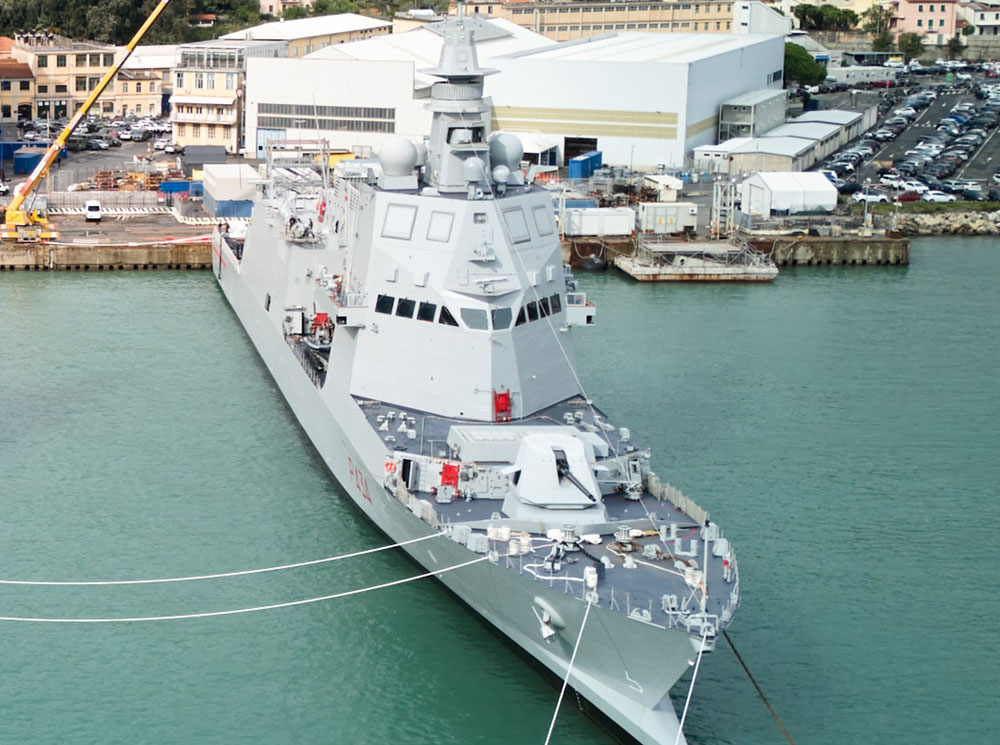
The Italian Navy has placed a contract with Fincantieri to build two more PPA multipurpose combat vessels. The new vessels will replace those earmarked for transfer to Indonesia.

The contract for the new vessels, managed by the Organisation Conjointe de Coopération en matière d’Armement, was placed with a consortium comprising Fincantieri as lead contractor and Leonardo as its principal partner. The value of the contract for Fincantieri is approximately €700 million, including work already carried out on the units now destined for Indonesia.

The new PPA multipurpose combat ships will be delivered in the ‘Light Plus’ configuration by Fincantieri’s shipyards in Riva Trigoso and Muggiano. Deliveries are scheduled for 2029 and 2030, respectively. Fincantieri CEO Pierroberto Folgiero says: “The new units will bolster the national supply chain, ensuring production continuity and employment stability, while also strengthening Italy’s role as a central player in the global defence landscape, where shipbuilding is increasingly a key element of influence and international cooperation.”

The new vessels will be capable of undertaking multiple missions, including patrol, search and rescue and civil protection operations, and are considered first-line fighting vessels. The PPAs are designed to be ‘fitted for but not with’ so that additional capabilities can be integrated over time using a shared platform. They will have a length overall of 143m, speed in excess of 31 knots and a crew of 171, plus a combined diesel and gas turbine propulsion plant and an electric propulsion system.

BAE Systems expands Glasgow facility with Janet Harvey Hall

BAE Systems has opened a new shipbuilding hall at its facility in Glasgow, in a bid to improve schedule performance while reducing typical times between ship deliveries.

Named the Janet Harvey Hall, in memory of a female electrician who worked in shipyards on the Clyde during WW2, the 170m-long, 80m-wide new space has the capacity to build two Type 26 frigates side-by-side. HMS Belfast and HMS Birmingham are currently under construction in the hall, BAE Systems says.

Janet Harvey Hall is also equipped with two 100tonne-capacity and two 20tonne-capacity cranes, and can accommodate up to 500 workers per shift. The opening of the hall is a first for Glasgow, enabling warship construction under cover for the first time, thus eliminating the need for downtime in harsh wind and rain.

The hall was established as part of BAE Systems’ £300 million modernisation and digitalisation programme. According to Stephen Charlick, MoD DE&S Type 26 resident project officer: “Protecting the UK and its interests from evolving global threats requires state-of-the-art vessels like the Type 26 frigate…the investment by our partner, BAE Systems, underscores the commitment to equipping our armed forces.

“The Janet Harvey Hall brings an improved approach to warship assembly and outfit, driving quality throughout the build, and this approach supports regular delivery of vessels in line with the Royal Navy need.”

Mediterranean methanol first for Grimaldi Group

Finnish ship designer Deltamarin has signed a contract with China Merchants Jinling Shipyard (Weihai) for six new methanol-compatible ro-pax vessels. Ordered by Grimaldi Group, the ferries will be built to the specs of the ‘Next Generation Med’ class and will cover Mediterranean routes serviced by the owner’s Grimaldi Lines and Minoan Lines subsidiaries.

Each newbuild will feature: a length of 229m; 3,300 lane metres for rolling freight; and the capacity for up to 2,500 passengers and 300 passenger vehicles. The design also includes more than 300 cabins to sleep at least 1,200 guests.

Deltamarin says: “The vessels will be powered by engines capable of running on methanol, making them the first ships in the Mediterranean designed specifically for this alternative fuel.” Additional green credentials will include advanced onboard power management systems, silicon-based hull coatings, shore power readiness, an optimised hullform and optimised propeller design. “These features will collectively reduce CO2 emissions per cargo unit by more than 50% compared to current vessels operating on similar routes,” Deltamarin claims.

Four of the six vessels will be operated by Grimaldi Lines under the Italian flag, while the remaining two will be operated by Minoan Lines and will sail under the Greek flag. The vessels will be delivered between 2028-2030.

Repair round-up: Scandlines to convert ferries to hybrid operations

Scandlines to convert ferries to hybrid operation

Copenhagen-based Scandlines is converting two of the ferries operating the Puttgarden-Rødby route to plug-in hybrid operation, involving an investment of around €31 million. The aim is to reduce CO2 emissions by up to 80%, the company states. The refit includes the installation of 5MWh battery systems on each ferry and charging facilities on board and at the Puttgarden and Rødby ferry berths. The in-port charging time will be just 12 minutes.

Scandlines has signed a contract with Western Shiprepair in Lithuania for the conversion work. The first ferry will arrive at Western Shiprepair at the end of August and the second in December. Both conversions will be completed in 2026.

New Jacksonville repair facility becomes operational

BAE Systems has officially opened a US$250 million ship lift and land-level ship repair facility in Jacksonville, Florida. The upgraded complex will support the maintenance and repair of both naval vessels and commercial ships in the region. With the capacity to lift vessels displacing up to 25,000tonnes and accommodate multiple vessels for maintenance simultaneously ashore, the new complex expands the shipyard’s capabilities by more than 300%.

The project, undertaken together with Pearlson Shiplift Corporation, Foth Engineering and Kiewit Infrastructure South Co, replaces an 80-year-old drydock that had reached the end of its life span. The new ship lift system’s platform, which spans 150m x 33.5m, is the largest of its type in the Americas.

Greek floating dock resumes operations

Piraeus Port Authority has announced the resumption of full operational activity at its floating dock Piraeus II at the Perama Ship Repair Zone, following completion of a series of extensive repair and maintenance works. The investment was carried out as part of a special survey, which was successfully concluded with the issuing of a new five-year operational certificate by the relevant classification society.

The dock’s return to operation was marked by the docking of the ro-pax vessel Poseidon. The upgrade of the dock – measuring 113m in length and 18.5m in internal width, and offering a lift capacity of 4,000tonnes – is one of a number of developments planned by the port authority to “radically transform” the Perama Ship Repair Zone and make it a more competitive option for ship repair projects in the Mediterranean.

FAME B100 certification for 'Whitchampion'

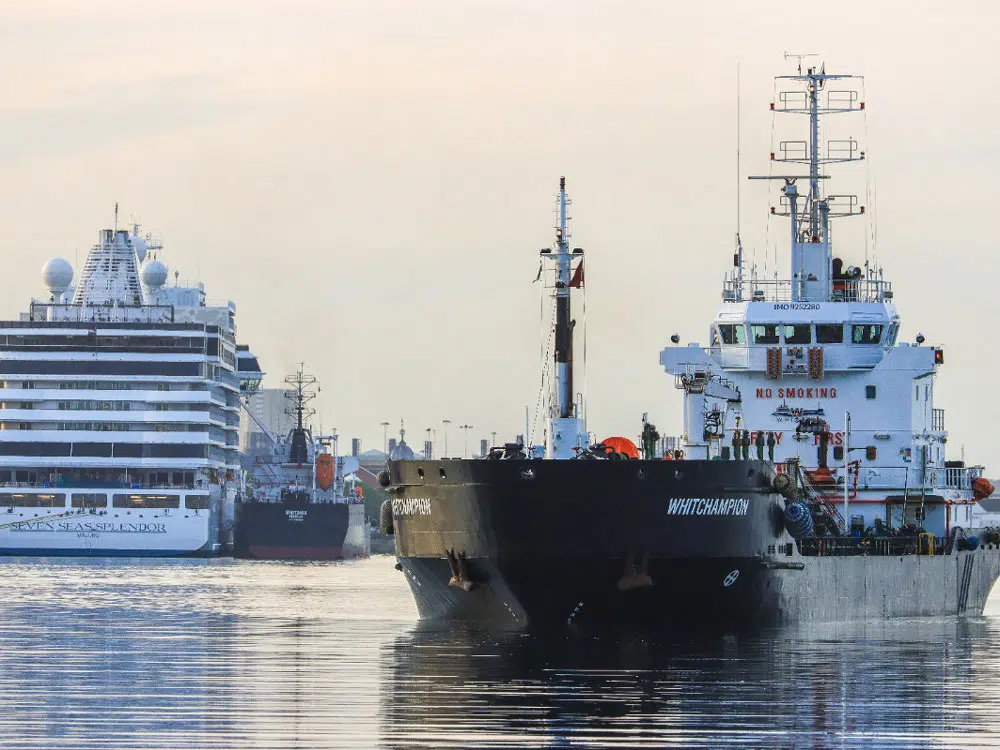
The 85m x 15m Whitchampion has become the first bunker tanker certified to load, carry and blend fatty acid methyl ester (FAME) B100 on board, according to classification society Lloyd’s Register (LR). The 2003-built vessel, operated by UK-based John H. Whitaker (Tankers), secured this certification from LR on behalf of the Isle of Man Flag Administration, and under the International Bulk Chemical (IBC) Code and MARPOL Annex II regulations.

As a result, Whitchampion’s personnel can now perform onboard blending of biofuels with petroleum distillates and residual fuel oils within UK coastal waters. LR comments: “Bunker tankers certified under MARPOL Annex I are limited to carrying blends [of] no more than 30% FAME under IMO regulations. Oil fuels with higher bio-content fall under the IBC Code and MARPOL Annex II, typically requiring full chemical tanker status. That regulation has, in effect, frozen out a significant portion of the conventional bunker tanker fleet from supporting mid-to-high-range biofuel blending. 

Whitchampion is the first LR-classed vessel to bridge that gap. Through comprehensive gap analysis and risk assessment against the IBC Code and MARPOL Annex II requirements, LR developed an approach which involved mitigation of the assessed risks. This led to obtaining waivers/exemptions from the flag administration, allowing this Annex I bunker tanker to gain chemical certification to carry FAME as cargo, without needing to convert to full chemical tanker status.” 

A second Whitaker tanker, Whitchallenger, will undergo a similar approval process, with certification anticipated later this year, LR adds. 

Downloadable directory from The Hovercraft Society

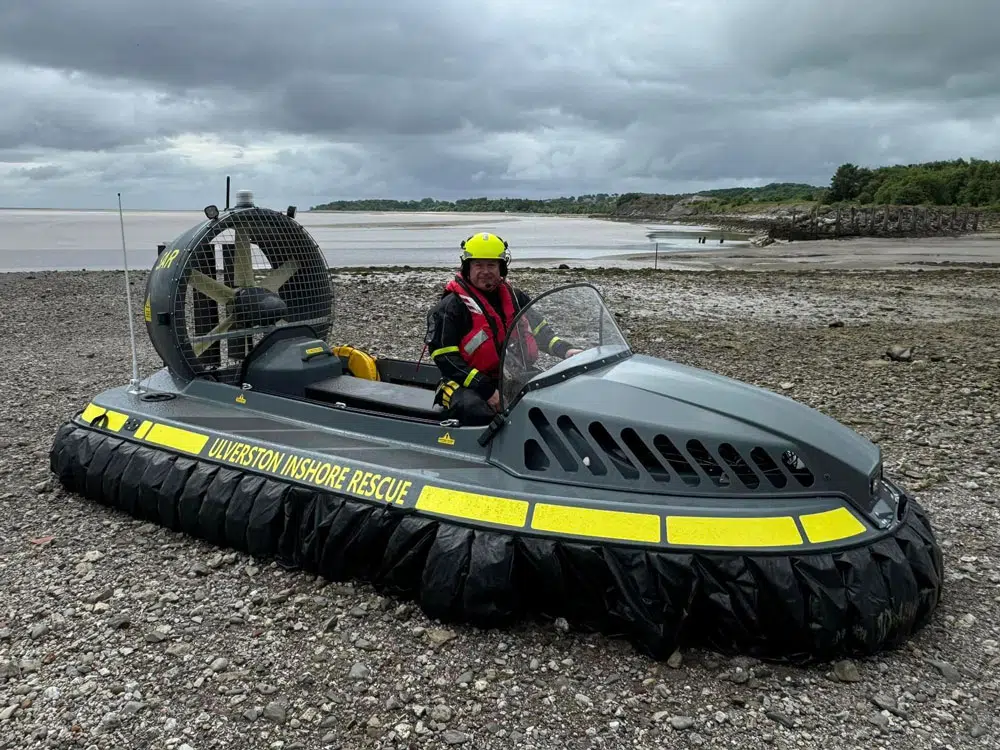
The Hovercraft Society has published the first issue of its Light and Recreational Hovercraft Directory, created to place a spotlight on hovercraft-related events, rides, hire opportunities and service around the world, as well as sharing the details of internationally based hovercraft builders and suppliers.

Alan Bliault, technical secretary, The Hovercraft Society (and a contributor to articles on hovercraft and surface effect ship design in previous issues of Ship & Boat International and The Naval Architect), says: “Our primary aim with this directory is to enable people to connect with organisations that support activities related to recreational hovercraft. Formal and informal events are important to get to know what hovercraft are all about: the excitement and pleasure they can bring, whether piloting or in supporting or attending.”

The 50-page directory can be downloaded for free at https://www.thehovercraftsociety.org.uk/light-and-recreational-hovercraft-2/

Geopolitical instability still big trouble for shipping, ICS report notes

Global political instability may now be the number one concern for shipowners, operators and C-suite personnel, according to the fourth and most recent edition of the International Chamber of Shipping’s (ICS’) Maritime Barometer Report. The 2024-2025 edition of the report indicates that this instability remains the biggest concern for respondents for the third consecutive year since the 2022-2023 edition.

In his introduction to the report, ICS chairman Emanuele Grimaldi comments: “Geopolitical instability is no longer a background factor; it is actively reshaping our operating conditions, redrawing trade routes and influencing commercial decisions across the globe.” Other significant identified threats include: malicious physical attacks; administrative burden; regulatory uncertainty (especially when it comes to decarbonisation, alternative fuels and emissions control); and cyber-attacks.

Grimaldi continues: “Geopolitics also underpins some of the growing threat we face on the cybersecurity front, with state-sponsored or linked attacks on the rise. It is vital that we continue to assess where our weaknesses lie and create robust response and recovery strategies that are well-communicated and understood across all strata of employees.” With regard to alt-fuels, the report hints that owner and operator respondents are currently more “bullish” on proven, conventional fuels, adding: “Methanol and ammonia remain key future fuel choices, but, as the realities hampering alternative fuel availability and infrastructure become clearer, leaders appear to be more comfortable planning operations around fuels with established infrastructure, known bunkering and safety procedures and clearer cost profiles.” It warns: “Shipping risks missing its decarbonisation targets without strong economic and regulatory signals plus increased public funding.”

Other, and newer, areas of concern include extreme weather events, financial instability and availability of crew and personnel, the latest report reveals.

The report was published shortly before the Shaping the Future of Shipping summit in Athens, hosted by ICS, the Greek Ministry of Maritime Affairs and the Union of Greek Shipowners. Grimaldi states: “Whether addressing the green transition and decarbonisation, cyber-threats or trade barriers, closer collaboration between industry and governments is essential. The solutions are within reach, but unity is critical.”

Design of FFG-62 frigate further behind schedule than realised

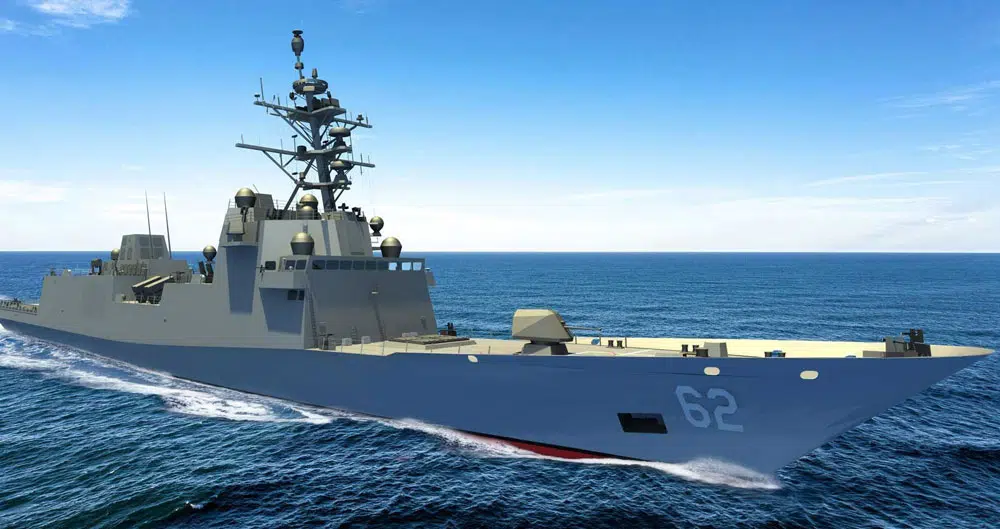
The design of the US Navy’s troubled FFG 62 Constellation-class frigate programme is further behind schedule than realised, and the ship is now much heavier than anticipated, which could compromise its performance.

According to a June 2025 report from the Government Accountability Office (GAO), 2025 Weapon Systems Annual Assessment, the US Navy continues to face challenges completing functional design of the vessel, which is needed to demonstrate design stability. More than two years after beginning lead ship construction, this persistent lack of design stability has stalled construction of the lead ship and poses the same risk to initial follow-on ships, the GAO said.

The US Navy currently plans to deliver the lead frigate in April 2029, three years later than the contracted delivery date. It continues to work with the shipbuilder to revise basic design documents – including the ship’s general arrangement drawings – and structural components of the ship.

The latest GAO report also suggests that functional design of the vessel is much further behind schedule than was reported only last year. In response to a recommendation the GAO made in a May 2024 report, the programme restructured its functional design metrics to more closely align with actual design progress. As a result, it was concluded that functional design progress was significantly less than the 92% complete  reported in August 2023. In fact, as of December 2024, the programme reported that functional design was actually 70% complete, as measured with the restructured metrics. Programme officials told the GAO they expected to achieve a stable basic and functional design “by late spring 2025”, but the programme has yet to achieve its planned rate of design progress to meet this goal.

The frigate design is further complicated by unanticipated weight growth. In October 2024, the US Navy reported 759tonnes of weight growth from initial estimates, a near 13% increase, due in part to the underestimation of applying US Navy technical requirements to a foreign ship design. The GAO says US Navy personnel are working with the shipbuilder to reduce the ship’s weight, but weight growth has only become more pronounced over the last year. “Unplanned weight growth during construction can compromise capabilities…and such alterations may leave frigates less combat-capable, limit the ability to add capabilities to address evolving threats and reduce planned service lives,” the GAO noted.

As of November 2024, officials reported that the shipbuilder had submitted five requests for “equitable adjustment”, raising the potential for unbudgeted cost growth. Requests for equitable adjustment provide a remedy payable only when unforeseen or unintended circumstances – such as government modification of a contract – cause an increase in costs. The US Navy deemed the total costs of the five requests “not suitable for public release”. According to officials, these requests relate to government change orders and significant design changes from the frigate’s parent ship design.

Despite the unresolved issues identified above, the US Navy has proceeded full steam ahead with the programme, exercising options for the fifth and six ships in May 2024. In November 2024, the US Navy requested information seeking a second shipbuilder to build the frigates, and, in January 2025, began assessing industry responses to inform future acquisition strategies.

'Naija Spirit' wins WFSA contest for a safe Lagos ferry

This year, the Worldwide Ferry Safety Association (WFSA) concluded its 12th International Maritime Student Design Competition, an annual initiative hosted to encourage students to create designs for safe, stable and affordable domestic ferries – and particularly for rivers and regions within developing countries, or which are prone to higher-than-average rates of accidents.

Last year, the contest called for a design for a ro-pax ferry for the River Niger in Nigeria, which was won by Team Nawasena from ITS, Indonesia. The Nigerian Inland Water Authority, which regulates some 3,000 waterways, has been working to combat an unacceptably high death toll – with 1,000 fatalities attributed to domestic ferry accidents in 2023 – within this network.

The 12th WFSA student design contest saw the association return to Nigeria, with David Okafor, a naval architect with the Nigerian Navy, again assisting in drawing up the specifications for the design teams. This year’s challenge called for a 200-pax electric ferry capable of navigating Lagos’ waterways, emphasising a 25km route linking Ikorodu, a northeastern business zone, to the CMS transport hub on Lagos Island. The student teams had to factor in constraints such as low-clearance bridges, shallow docking depths (2.5m is common, Okafor advised) and water hyacinths, the latter of which can block ferry channels and jetties and cause damage to boat propellers and engines.

This year’s winning entry was Naija Spirit, a 28m, double-deck aluminium catamaran, designed by Team Black Pearl of the Bangladesh University of Engineering and Technology (BUET). Team Black Pearl was captained by final-year student Md. Safayet Hossain Shishir – who, incidentally, was part of the BUET team that secured second-place in last year’s WFSA River Niger design competition.

Shishir tells The Naval Architect: “This edition of the competition allowed roughly three months to complete the entire project, which included everything from initial studies and literature reviews to developing preliminary plans, performing calculations, making critical design decisions and executing the final design. We overcame this challenge through effective coordination within the team, clearly assigning tasks with specific deadlines and managing our resources efficiently.”

Being based in Bangladesh made it difficult to obtain a comprehensive overview of Lagos’ riverine conditions. “To address this, we conducted extensive online research and gathered relevant information to ensure our design would be suitable for the region and aligned with international standards,” he says. “For instance, we paid special attention to ensuring the ferry’s speed would be competitive with local road transportation. To estimate road travel times accurately, we performed a detailed traffic analysis, using Google Maps over an entire day.”

One of the most critical challenges, though, Shishir highlights, was the design of the vessel’s electric battery pack. “It had to provide sufficient capacity for a complete round trip, while remaining as lightweight as possible to maintain vessel efficiency,” he says. “Another major focus was ensuring the ferry offered a clear travel time advantage over road transportation. This required identifying the optimal operating speed, minimising hydrodynamic resistance and targeting a one-way travel time of around 40 minutes.

“Additionally, balancing charging time with battery weight posed a significant engineering challenge. Achieving the right trade-off was essential to ensure efficient turnaround, sustained performance and overall operational viability.”

Naija Spirit would utilise an integrated electric propulsion system, comprising: two marine-grade, permanent magnet electric motors, rated 680kW at 1,200rpm apiece; a 584kW thruster with retractable, tiltable propellers; Sinus Penta 0457-series variable frequency drive inverters, with operating power bands spanning 1.3kW to 3,000kW; and switchboards provided by Stadt.

The set-up would also incorporate a hydrogen fuel cell system, to serve as an emergency power source while avoiding greenhouse gas (GHG) emissions. Shishir explains: “In the event of a failure in the main propulsion system, the ferry will rely on the hydrogen fuel cell to maintain a speed of up to 14knots, ensuring it can safely reach the nearest terminal.”

For Naija Spirit, the team chose two 1tonne Ballard hydrogen fuel cells, placed under the main deck at the demi hull. These would be paired with four Mahytec RGV500 hydrogen tanks, each with a 6.5kg capacity and weighing 0.185tonnes. Shishir adds: “Weight has always been a critical challenge…the main issue was finding a hydrogen fuel cell with a suitable height to fit within the under-deck space.”

Team Black Pearl also calculated that 168 battery modules would be required, constituting a combined weight of 14.66tonnes. EST-Floattech’s NMA-certified Octopus-branded batteries were selected. Shishir says: “The battery room is situated on the under deck.” Due to the battery pack’s weight, the room was “positioned around the midship, to ensure vessel stability,” he explains, adding: “The battery spaces are isolated using watertight bulkheads, and designated in compartments in both demi hulls symmetrically, also maintaining structural integrity.”

With the above propulsive arrangement, the team calculated that Naija Spirit would be capable of operating at a maximum speed of 20knots. “It can complete two trips – Ikorodu to CMS and back – covering 50km before requiring a recharge,” Shishir says. “The ferry can complete up to 10 trips within the 12-hour operating window, from 6am to 6pm, covering approximately 250km in total.”

Other clean energy features include a 55m2 spread of Solbian flexible solar panels, mounted on the roof and at points around the ferry. Each panel is rated 0.216kW, Shishir says, adding: “Assuming six hours of effective sunshine, the panels can generate a total of 71.28kWh – enough energy to power the ferry’s hotel loads on that day.” An additional 154kW of power would be generated by an underwater hydrokinetic turbine “with a diameter equal to the ferry’s draught, placed at the region of maximum flow velocity, identified by CFD analysis”, Shishir adds. 

Tailor-made transfers for Japanese wind parks

Japan’s offshore wind farm sector is gaining momentum as part of the country’s push for carbon neutrality by 2050. The country aims to install 10GW of offshore wind capacity by 2030, and as much as 30-40GW by 2040, with a focus on both fixed-bottom and floating turbines – the latter technology being particularly important due to the country’s deep coastal waters.

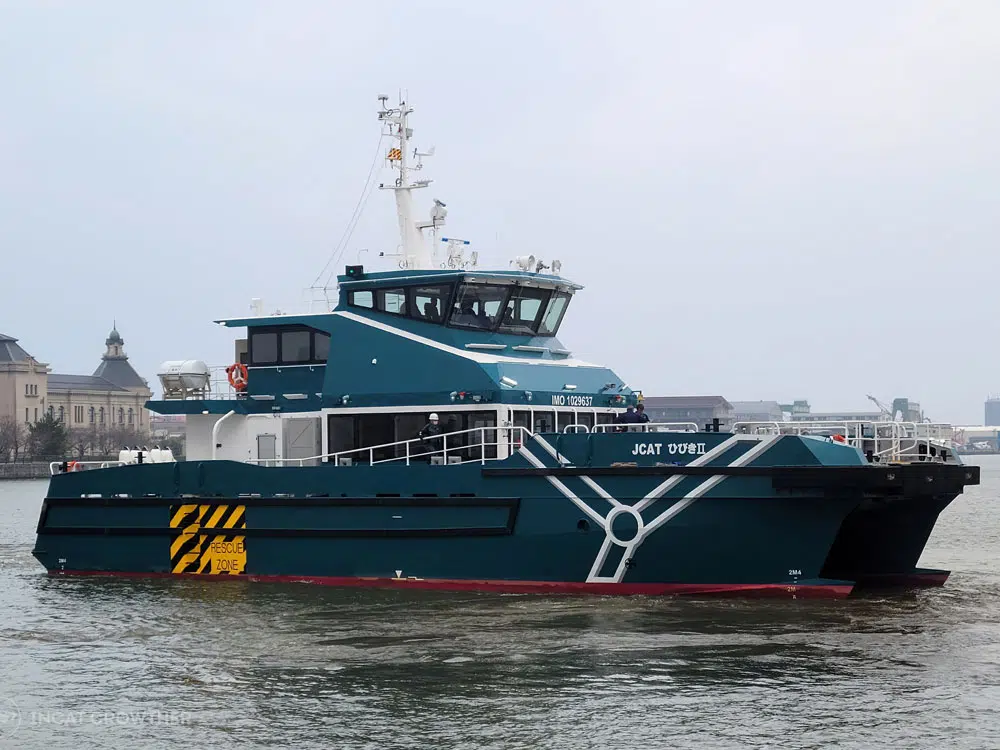
There have been a few short-term setbacks over the past five years, mainly related to supply chain glitches, inflation and technical challenges. However, Japan’s potential for an offshore wind infrastructure exceeding 9,000TWh per year has attracted OEMs, suppliers, service providers – and, of course, boat operator and builders. For example, this year saw Japanese operator Tokyo Kisen Co take delivery of the first of two bespoke aluminium crew transfer vessel (CTV) catamarans. The first in the new TK-27 class, designed exclusively for Tokyo Kisen by Australian naval architect Incat Crowther, completed its sea trials in late 2024, before being delivered to the operator in April 2025.

This vessel and her in-build sister have been constructed by Cheoy Lee in Hong Kong and classed domestically by ClassNK, with Tokyo Kisen also providing input into the duo’s design, to ensure that the boats were suited to their working environments off the coast of Japan – and to meet recently revamped but stringent local rules.

Incat Crowther elaborates: “The design was developed in compliance with ClassNK rules for High-Speed Craft, while also incorporating its newly introduced rule addition: Part O (12) – Wind Farm Support Vessels, which had recently been appended to the Rules for the Survey and Construction of Steel Ships. This led to conflicts between the High-Speed Craft and Steel Ship rules, with the latter being naturally unsuitable for a 27m aluminium catamaran.”

While resolving these conflicts proved somewhat challenging – not least with ClassNK being “relatively new to the CTV industry”, Incat Crowther tells The Naval Architect – the debut cat has become the first vessel to adopt this new amendment, thereby opening the door for further builds of this type.

The design of the cats has also been “future-proofed”, Incat Crowther explains, in terms of both occupancy and propulsion. For example, while each TK-27 cat will begin its working life carrying 12 turbine technicians, it will retain the flexibility to boost this number to 24 “as Japan’s regulatory framework evolves” and CTVs become more commonplace – and as the country’s network of turbines expands, the designer points out. Similarly, both cats have been prepped for future fuels. While each currently employs twin Yanmar 12AYM-WET main diesel engines, rated 1,220kW apiece and ensuring a top speed of 28knots, it will be possible to upgrade the boats to dual-fuel or even all-electric/pure-biofuel operations as these technologies gain pace. The Yanmar engines are combined with a controllable-pitch propeller (CPP) system supplied by Servogear.

Incat Crowther has designed nearly 50 CTVs over 25m, many of which operate in Europe’s offshore wind farm sector. While Japan’s offshore wind industry presents unique challenges, the designer notes that adapting vessels to Japanese weather and wave conditions was a manageable transition. “The conditions around the Japanese coastline were no more challenging than those typically encountered in European offshore wind farms,” the group reveals.

Each TK-27 cat offers a 45m2 useable foredeck cargo area and 18m2 of aft deck, both strengthened to accommodate a combined maximum payload of 35tonnes, and the  superstructure is resiliently mounted for lower noise and vibrations. The TK-27 twins also incorporate Incat Crowther’s Resilent Bow Technology, developed to minimise impact loads at the wind turbine boat landings and to reduce onboard accelerations. Incat Crowther says: “This, combined with the high bollard pull, will provide a transfer wave height in excess of 2m” – thus extending the CTVs’ operational windows.

Each cat’s main deck houses a large mess area, two bathrooms and an internal storage and personnel change area. The upper deck features the elevated wheelhouse, a private mess and a pantry, while the lower decks offer two twin cabins, a workshop space and a utility room. Other onboard capacities include tankage for 25,400litres of fuel oil, 2,500litres of fresh water and 2,000litres of sullage.